Showing posts with label National Car Care Month. Show all posts

Wednesday, April 25, 2018

National Car Care Month: Spring for Inspection of Your Alignment and Suspension

National Car Care Month: Spring Inspection of Your Alignment and Suspension

MT. PLEASANT, Mich., -- With harsh winters and the drastic freeze/thaw cycles we experience heading into springtime, Michiganders are no strangers to terrible road conditions. Something we may not be aware of however is how much the alignment and suspension of our cars suffer when we drive over the many potholes that open up when the seasons change, and more importantly how to know when something's wrong and head in for service. Even if you don't suspect anything is amiss, spring is still a great time to schedule an inspection to make sure everything is well and good.

During National Car Care MonthGraff Mt. Pleasant wants to share with you the importance of having your alignment and suspension inspected this spring.


National Car Care Month: Spring for Inspection of Your Alignment and Suspension

ALIGNMENT

Over time, things like potholes, dirt/uneven roads, and regular driving can take a toll on your vehicle's wheel alignment. However, road conditions get particularly nasty here during the winter here in Michigan, so it's extremely important that you check up on your alignment when Mother Nature finally decides to let up for the season.

When your wheels aren't properly aligned, your car has to work harder to move thus causing its performance to suffer. Spring alignment care is important because it maximizes tire life, performance, and fuel efficiency. Scheduling an alignment check at Graff Mt. Pleasant is super easy, and here are some signs for you to look out for in the meantime:
  • Your car pulls to one side
  • Vibrations in the steering wheel
  • Visible uneven tire tread wear
  • Squealing tires
  • Your steering wheel turns while traveling straight
Of course, even if you don't notice something wrong, springtime is the perfect time to head in for an alignment inspection just in case.

National Car Care Month: Spring for Inspection of Your Alignment and Suspension

SUSPENSION

Your vehicle's suspension is responsible for controlling the bounce and impacts of certain rough road conditions and helps to keep the tires in contact with the road. It also helps to provide consistent handling, control rolling and swaying, encourages even tire and brake wear, and contributes to overall passenger comfort. Spring suspension care is especially important after experiencing treacherous road conditions during the winter (and let's be honest, even well into spring). You can easily schedule a suspension inspection at Graff Mt. Pleasant, should you notice any of the following warning signs:
  • Hard steering
  • Heavy tipping feeling when turning
  • Nose-dive stops
  • Rough ride
  • Excessive bounce
  • Low riding height of the vehicle
It's also good to just pop in for an inspection when the seasons change, to make sure everything is in top working condition.

We in the Mitten State know that terrible road conditions are a fact of life, and our alignment and suspension suffer a great deal as a result. As we head into spring, it's a good idea to have both inspected to make sure your vehicle is ready to hit the road, and certainly if you spot any of the warning signs we've listed. Spring Car Care is not only essential to protect your investment, but also ensure yours and your family's safety.


At Hank Graff Mt. Pleasant we strive to provide our customers with a car buying experience that is accommodating, stress-free and fun! Visit us at our Chevrolet dealership located at 4580 E Pickard Rd in Mount Pleasant, Michigan 48858 or our Buick GMC Cadillac dealership located at 116 N. Mission St in Mount Pleasant, MI 48858.

Websites: Chevrolet: HankGraffMtPleasant.com and Buick GMC Cadillac: GraffBGC.com


Monday, April 16, 2018

Oil and Important Fluids: Why and How to Check them for National Car Care Month

Oil and Important Fluids: Why and How to Check them for National Car Care Month

MT. PLEASANT, Mich. -- There are three important fluids that run through your vehicle and all of them serve specific purposes that affect function, performance, and efficiency. Making sure they're regularly checked, flushed, topped off, and changed is an essential part of seasonal maintenance that will improve the longevity and safety of your car. Oil, coolant, and washer fluid should be checked on a routine basis, and the start of spring is the perfect time to do so. If you're planning on spending a lot of time on the road come the warmer months, it's even more important to schedule a service appointment with us to stay safe and make sure your car is running at its best.

We at Hank Graff Mt. Pleasant are here to tell you about oil and important fluids, and why and how you should check them for National Car Care Month.


Oil and Important Fluids: Why and How to Check them for National Car Care Month


WASHER FLUID

Washer fluid works together with your wiper blades to allow you clear visibility through your windshield. Some vehicles have built-in sensors that signal low washer fluid levels on the dashboard, while others do not. In any case, it's important to learn how to check it yourself so you always have a means of clearing your windshield of precipitation and debris while driving. The opening to your vehicle's washer fluid tank can be found under the hood, indicated by a picture of a windshield on the cap. When completely empty, most washer fluid reservoirs will take a whole gallon. No matter what the level, be sure to pour evenly and slowly.

If you go the route of doing it yourself, make sure you get a pre-diluted washer fluid that's rated for the temperatures you'll be driving in, otherwise you can risk it freezing in the tank. This information is always printed on the label. Though if you're unsure about going it alone, visit our service center and we'll gladly top it off for you!


Oil and Important Fluids: Why and How to Check them for National Car Care Month

OIL CHANGE

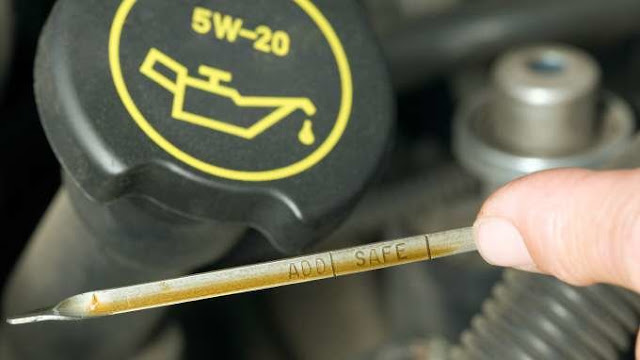
Oil is an extremely important component of a well-running vehicle, as it lubricates the moving parts of your engine, helps to reduce heat caused by friction, keeps the engine clean, and protects it against wear. Routinely having your oil changed can help you avoid expensive damage in the long-run, as well as enhance the overall longevity of your car. Routine oil changes should be done every 3,000-5,000 miles, or sometimes longer depending on your driving habits and if your vehicle uses synthetic oil. If you're not sure, always consult your owner's manual.

However, if you have any upcoming road trips or other spring and summer activities that will put you on the road more often, stop in for an oil change to ensure your vehicle can handle it and that your engine runs smoothly.


Oil and Important Fluids: Why and How to Check them for National Car Care Month

COOLANT

Coolant, also known as antifreeze, is responsible for controlling the temperature of various engine components. It serves a dual purpose of keeping the radiators in your vehicle from freezing or overheating throughout the year. We recommend replacing your coolant every two years or 24,000 miles, whichever comes first. Different vehicles have different needs, however. So when in doubt, always check your owner's manual for your make and model's specs.

If you suspect that your engine may be overheating or detect a sweet smell while driving that might indicate a coolant leak, come visit us and our service experts can see what's going on, and top it off if needed. With warmer temperatures on the way, spring is the perfect time to check your coolant fluid checked to prevent overheating.

Now you know why it's important to check your oil and important fluids, and how to do it. All three fluids serve crucial purposes that are essential to a well-running vehicle and work together to ensure your safety as well as that of your investment. To perform their duties, however, they need your help. If you're uncomfortable checking or changing these fluids yourself, Graff Mt. Pleasant's friendly team of service specialists will gladly do it for you! Schedule an appointment today!

At Hank Graff Mt. Pleasant we strive to provide our customers with a car buying experience that is accommodating, stress-free and fun! Visit us at our Chevrolet dealership located at 4580 E Pickard Rd in Mount Pleasant, Michigan 48858 or our Buick GMC Cadillac dealership located at 116 N. Mission St in Mount Pleasant, MI 48858.

Websites: Chevrolet: HankGraffMtPleasant.com and Buick GMC Cadillac: GraffBGC.com


Monday, April 9, 2018

Have Your Belts and Hoses Inspected for National Car Care Month

Have Your Belts and Hoses Inspected for National Car Care Month


MT. PLEASANT, Mich.,---We at Hank Graff Mt. Pleasant are here to share with you why you should have your belts and hoses inspected for National Care Care Month. When it comes to keeping your vehicle running in good shape, your belts and hoses are some of the most important parts of your engine because they enable your car to run! Normal use will cause them to wear down over time, but are more susceptible to damage in extreme hot or cold weather. Hot weather can add heat on top of existing friction, which causes these parts to wear down a lot faster. while cold weather on the other hand can make them stiff and prone to cracking.

By following scheduled maintenance and having regular inspections completed, you can be sure that your belts and hoses are working properly. While they don't often require replacements, inspections can catch little issues before they become big problems. We've shared some tips below on the various kinds of belts and hoses that help your car run, as well as how to spot any signs of damage.

Have Your Belts and Hoses Inspected for National Car Care Month

BELTS

Your engine's belts control things like your AC compressor, water pump, alternator, engine valve intake and exhaust, and power steering. A broken belt can completely disable your vehicle, and the changing temperatures that come with springtime can make them more prone to wear. Damaged, cracked, or frayed belts can still run but can cause even bigger issues like your engine overheating. While they don't often require replacements, it is important to get your belts inspected regularly.

There are two kinds of belts your engine uses: the timing belt and the accessory or serpentine belt.

Timing Belt: Also known as the Cam belt, the timing belt synchronizes the rotation of the camshaft and crankshaft. This helps the engine's valves open and close at the right times during the cylinders' intake and exhaust strokes. You should have your timing belt replaced every 60,000-100,000 miles or whenever your owner's manual tells you to do so, and here are a few signs to look out for that may indicate a replacement is in order:
  • Your engine "jumps" gears
  • Your vehicle is completely disabled
  • There are plastic pieces from the camshaft gears in your oil pan
  • There is loss of oil pressure (due to the camshaft pieces being in your oil)
  • You hear a squeaking noise from your timing cover
  • You hear rattling noises coming from your engine
  • You have trouble starting your vehicle
Accessory or Serpentine Belt: Most vehicles usually have one or two drive/accessory belts. Also known as the "serpentine" belt, the accessory belt gets its name from the snake-like motion it uses around the pulleys of the engine. Its job is to transport power to components like your power steering pump, AC compressor, alternator, and many others.

Water, dirt, oil leaks, and excessive heat can cause your serpentine belt to wear down very quickly. You should have it inspected every 10,000-20,000 miles, and replaced every 60,000-100,000 miles or whenever your owner's manual tells you to do so. Here are a few signs that your accessory belt might need replacing:
  • An overheating engine
  • A disabled vehicle
  • A loss of power steering
  • A squealing or high-pitched noise while accelerating

Have Your Belts and Hoses Inspected for National Car Care Month

HOSES

In the same way your circulatory system moves blood and oxygen around your body, your engine's hoses move fluids vital to your car's performance throughout its entire system. A cracked or damaged hose can lead to the leaking of these vital fluids, like coolant or brake fluid, and reduce the efficiency of your vehicle. There are several kinds of hoses inside your car:

Radiator Hoses: This hose moves coolant through your engine to regulate its temperature. Without it, your engine can overheat which can in turn case major internal damage and lead to costly repairs. Here a few indicators of a radiator hose leak:
    • Drop in coolant level
    • Smoke coming from your engine
    • Rising engine temperature
    • A bright pool of liquid underneath your vehicle
Fuel Line: The fuel line transports fuel from your fuel tank to the fuel pump, and are typically made out of reinforced rubber but can also be made out of plastic or metal. While they aren't usually a part of your vehicle's routine maintenance, it is extremely important to have them checked before the end of the fall or beginning of spring when temperatures are changing drastically. Here are some signs you may need to replace your fuel line:
    • Loss in fuel efficiency/gas tank emptying faster than normal
    • Puddles of gas underneath your vehicle
    • Smelling gasoline while driving
    • Hard starts
    • Your vehicle not starting at all
Brake Lines/Hoses: Brake lines and hoses are used to stop your vehicle when you depress the brake pedal. Some vehicles made of steel and some made of rubber, but rubber takes the majority for the flexibility it provides to your car's suspension when traveling on uneven surfaces. Here's how to tell if you have a broken brake line or hose:
    • Loss of braking ability
    • "Soft" brakes
Now that you know why, go forth and have your belts and hoses inspected for National Car Care Month! Take care of your car, and it will take care of you. Schedule an appointment with our friendly and knowledgable service team today, and we'll help you keep your vehicle running at its best this spring and get it ready for your summer adventures!

At Hank Graff Mt. Pleasant we strive to provide our customers with a car buying experience that is accommodating, stress-free and fun! Visit us at our Chevrolet dealership located at 4580 E Pickard Rd in Mount Pleasant, Michigan 48858 or our Buick GMC Cadillac dealership located at 116 N. Mission St in Mount Pleasant, MI 48858.

Websites: Chevrolet: HankGraffMtPleasant.com and Buick GMC Cadillac: GraffBGC.com

Tuesday, April 3, 2018

Tire Maintenance Checklist for National Car Care Month

Tire Maintenance Checklist for National Car Care Month


MT. PLEASANT, Mich.,––Did you know... April is National Car Care Month? Your vehicle endures many hardships throughout the winter season. All that corrosive road salt, slippery ice, and heavy snow is gone, leaving our roads filled with nasty and dangerous potholes. These potholes are your tires' worst nightmare! Ensure your car is ready to take on Michigan roads this spring season by getting it up to speed with this tire maintenance checklist for National Car Care Month:


1. Perform Routine Tire Rotations

  • It is recommended that you rotate your vehicle's tires every 3,000-7,000 miles or every other oil change. Tires tend to wear unevenly, which is why it's important to rotate them to ensure they wear more evenly across all four of them. This will produce better handling overall. Bring your car into our service center for a tire rotation!

2. Check Out Your Tire Tread
  • Your tire's tread is what allows you to grip the road, serving as a buffer between both surfaces that keeps you safe during various weather patterns. If your vehicle has low tire tread, you'll be put at a higher risk of hydroplaning or losing grip during rainy conditions this spring! It can also increase your stopping distance, making it more difficult to stop in an emergency situation. Check your tire's tread using the penny method or have our team of experts inspect them for you!

3. Inspect Your Tire Pressure
  • The air pressure in your tires can become effected from various temperatures. It's critical that you maintain the recommended tire pressure at all times as it will improve your fuel economy, decrease risk for tire issues, and provide a much smoother ride as a whole. You can find the recommended PSI for your car's tires in the owner's manual. It's a good idea to check your air pressure in your tires every month or so. Our service team can fill up your tires if they are in need of some air!

4. Change Your Tires
  • Have you taken off your winter tires yet? If not, it's time to do so. Winter tires are only meant to handle 45 degrees Fahrenheit and below. We recommend switching back to all-season tires. If you're in need of a new set, our service experts will be happy to get your vehicle into brand-new tires! We highly recommend replacing all four at the same time, allowing for even tread wear.


Staying up-to-date with tire maintenance will ensure their effectiveness when gripping the road and will help extend their life down the road. Spring weather tends to bring slippery road conditions, making it crucial that your vehicle is up to speed on spring car care! Use our tire maintenance checklist for National Car Care Month to make sure you've covered all the bases. Consult our tire care page for more tips on maintaining your car this season. Don't forget to schedule an appointment online with our service team for a tire rotation, new set of wheels, or any other maintenance needs you may have!


Hank Graff Mt. Pleasant we strive to provide our customers with a car buying experience that is accommodating, stress-free and fun! Visit us at our Chevrolet dealership located at 4580 E Pickard Rd in Mount Pleasant, Michigan 48858 or our Buick GMC Cadillac dealership located at 116 N. Mission St in Mount Pleasant, MI 48858.

Websites: Chevrolet: HankGraffMtPleasant.com and Buick GMC Cadillac: GraffBGC.com